
AV production is everything in the room that has to be powered, connected and working at a specific minute, plus the people who make it work. At a corporate event that means the sound and microphones, the projectors, screens and displays, the stage and room lighting, and the stream or recording, along with the crew who plan it, build it, run it during the program and take it away afterward.
The phrase gets used loosely. One company means a pallet of equipment, another means a full crew with a technician at the console all day. Knowing what is inside it is the fastest way to compare two quotes that both say "AV production" on the first line.
What Does AV Production Consist Of?
AV production for corporate events covers four disciplines, and most corporate programs use all four.
Sound comes first, because speech is the whole product at a corporate event. That means a PA sized and aimed for the room, wireless handhelds, lavaliers, podium and tabletop microphones, and a mixer run by a person. Every microphone we send out runs through our AI-powered De-Feedback system, which catches the ring before the room hears it.
Video covers projection, screens and displays: a projector and screen sized to the throw distance and the light in the room, TVs for breakouts and lobbies, confidence monitors so presenters face the audience, and a switcher so the big screen shows only slides when laptops change.
Lighting is front light on the presenter so faces read from the back row and on camera, plus uplighting and stage lighting to bring a plain ballroom up to the brand colors.
Streaming and recording carry the room to the people who are elsewhere. The audio for a live stream should come straight off the mixer, so remote attendees hear the same clean speech the room hears.
The Four Jobs Behind AV Production
Equipment is one input. AV production is four jobs, and every corporate event has all of them, from a quarterly meeting to a three-day conference.
Planning the room comes first: reading the floor plan and the run of show, deciding where the screens and speakers go so sightlines and coverage hold up, and agreeing a load-in window with the venue. Building and testing comes next, with every microphone, laptop and playback source line checked before doors. Then the system is operated live, with a technician riding levels, cutting between sources and handling the schedule changes that always come on the day. Last is the strike, packed quietly once the room clears.
We lay out those four jobs, room by room, on our corporate AV services in Dallas page, including how a general session, breakouts and a boardroom run on one crew.
What AV Production Looks Like in a Real Room
At a corporate general session in a Dallas hotel ballroom this year the house lights stayed up and the windows stayed uncovered, which is how most conference rooms run. The sponsor slides held on an ambient light rejecting screen, the podium and lapel microphones ran through De-Feedback, and blue uplighting framed the stage. That is what corporate AV production looks like when it is planned for the room as it is rather than the room as the brochure shows it.
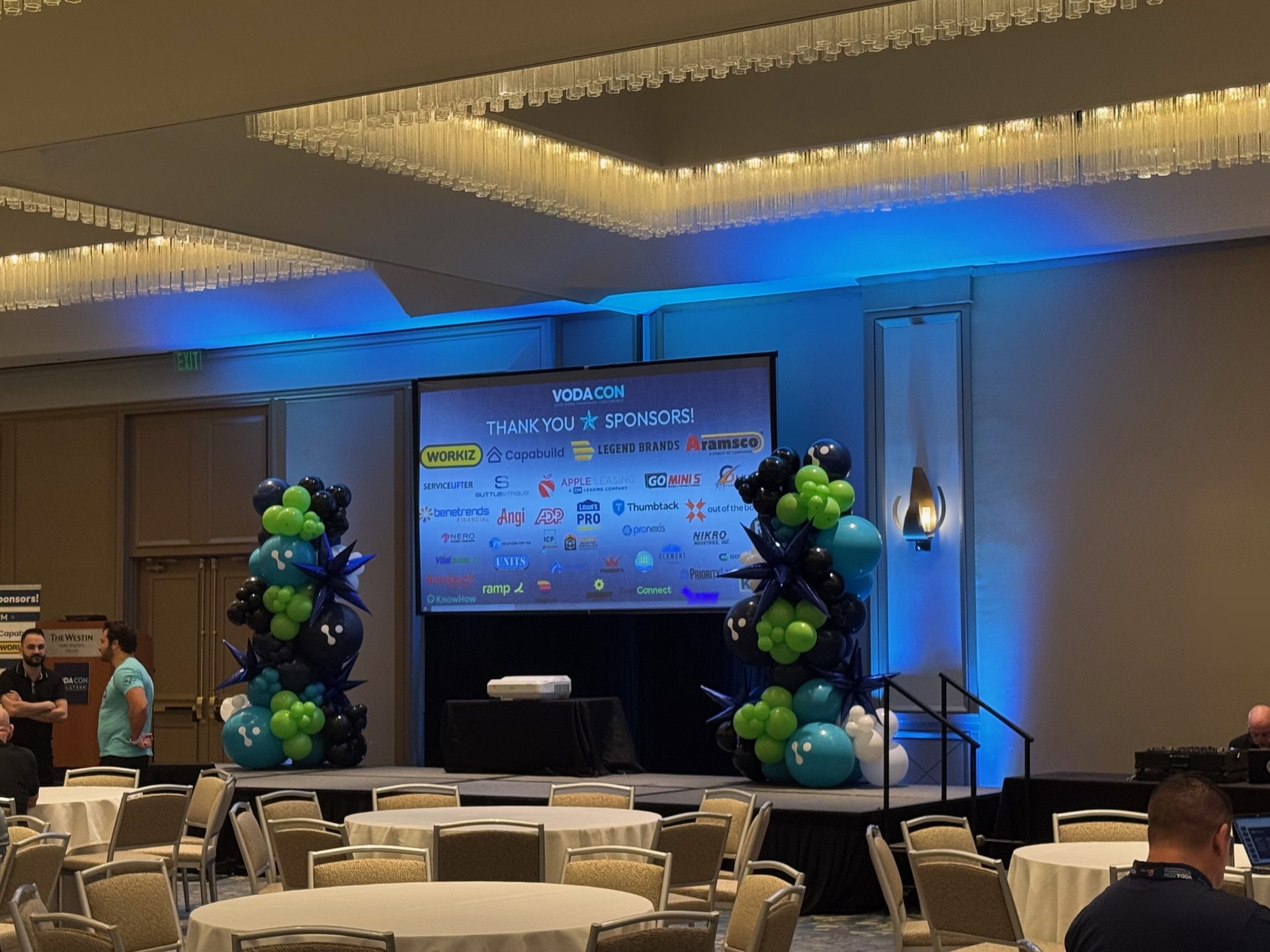
Smaller rooms follow the same pattern with less gear. A corporate training class can run on two powered speakers on stands, a wireless microphone and a projector on a framed screen, and it still gets a line check, a planned load-in and a clean strike.
How Long AV Production Takes on Event Day
Load-in time depends on the room and the program more than the guest count. A training room or a single breakout is usually built and line checked in about an hour. A general session with two screens, a panel stage, uplighting and a stream takes most of a morning, which is why AV production for corporate events often starts the night before or at dawn, with the venue's dock time agreed in the advance.
Rehearsal is part of that window. Presenters who walk the stage, test their microphone and click through their slides before doors open have a noticeably calmer first five minutes, and so does the planner. Good AV production builds that time into the schedule for corporate events of every size.
Strike is faster than load-in. Once the room clears, the crew packs the system in the reverse order it went in, so the venue can turn the room for the next booking on time.
AV Production, AV Rental and AV Installation
These are three different purchases for corporate events, and an AV production quote is easier to read once you know which one you are looking at.
AV rental is the equipment. With us that still means delivered, set up, tested and picked up by our crew, with a technician staying for the services that call for one. AV production is the equipment plus the people who operate it for the whole program, which is how we run corporate events. AV installation is a permanent system built into a boardroom or conference room by an integrator; when your office or venue already has one, an event crew patches into it and brings what the program needs on top.
Questions to Ask an AV Company Before a Corporate Event
Who is at the console during the program, and is it the same person who built the system that morning? Ask what the advance call covers and whether they talk to the venue directly about load-in and dock times. Ask whether they will send a certificate of insurance to the venue; we are insured and send one to any venue that asks.
Ask how the stream gets its audio, and how much rehearsal time the presenters get with their microphones and slides before doors. Ask whether the venue requires its in-house AV company, because most hotels and conference centers in Dallas-Fort Worth allow outside vendors and a good AV company will check the policy for you before you commit.
Where To Find Corporate AV Services
Dallas Event Audio has run event sound and AV across Dallas-Fort Worth since 2001, from forty-person quarterly meetings to multi-room conferences. If you are planning one, send us the date, the venue and the run of show. Our corporate AV services in Dallas page shows how we build each kind of room, and the reviews from corporate clients say how it went.